
Plastic Machine Delivery and Logistics to Nigeria
Plastic Machine Deli
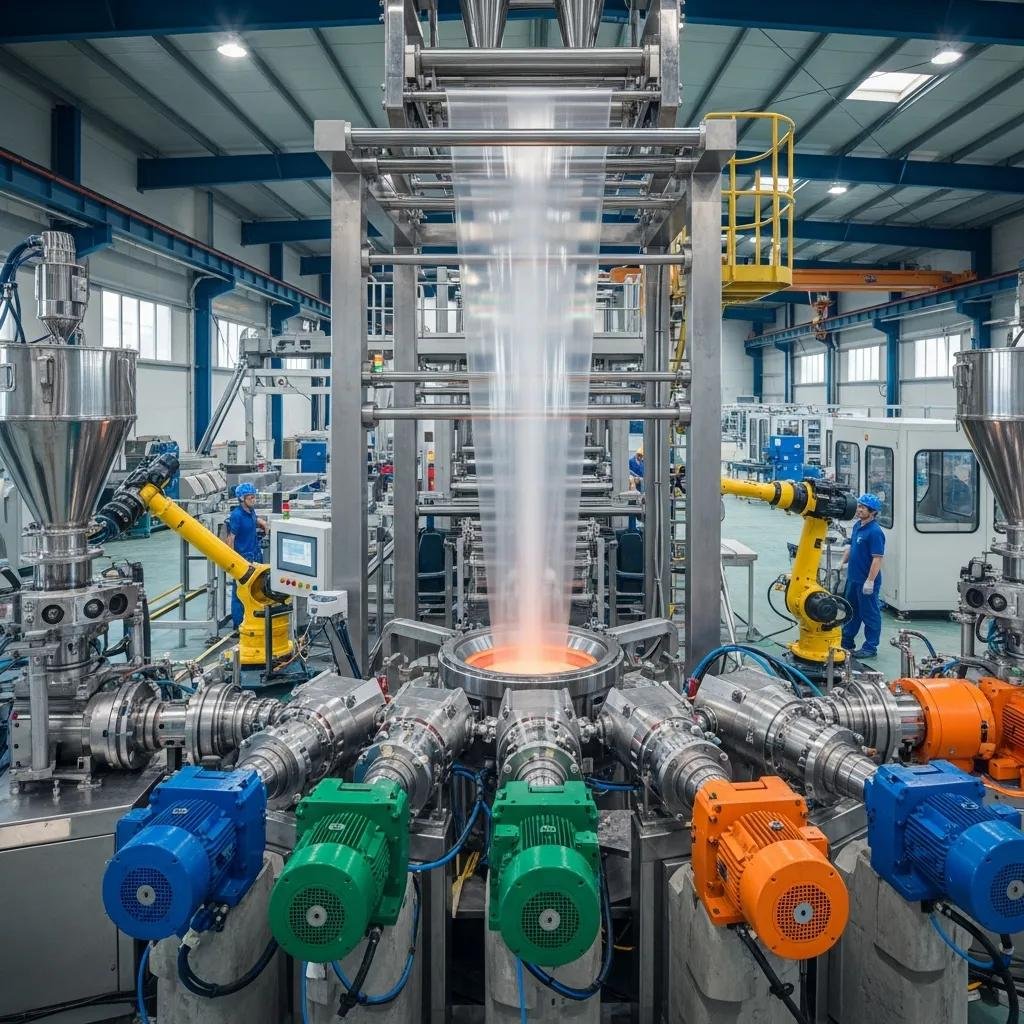
A 5 layer blown film extrusion line is an integrated co-extrusion system that combines five polymer melt streams into a single tubular film, delivering tailored barrier performance, mechanical strength, and processing flexibility for diverse packaging applications. This guide explains how multi-layer co-extrusion works, the key machine components, and the technical specifications buyers should evaluate when sourcing a 5 layer co-extrusion machine for Nigerian production. Manufacturers in food, medical, and industrial sectors benefit from improved oxygen and moisture protection, stronger seals, and reduced material costs through targeted layer design and barrier film technology. Throughout this article you will find step-by-step process descriptions, EAV-style specification and materials tables, practical application mapping for Nigeria, and transparent guidance on pricing, quotations, installation, and after-sales support. The content emphasizes high-speed blown film extrusion, biodegradable blown film extrusion options, and actionable checklists that buyers can use to compare suppliers and prepare accurate quote requests.
A 5 layer blown film extrusion line is a multi-extruder co-extrusion system where five independently metered extruders feed a co-extrusion die to form a five-layer tubular film that is expanded into a bubble and cooled to produce finished film. The mechanism relies on precise melt flow control and layer distribution so each layer fulfills a role—structural support, sealing, barrier, or tie adhesion—resulting in films with combined functional properties not achievable with single-layer film. Multi-layer construction produces films with superior barrier and mechanical attributes while enabling material cost optimization through thin functional layers combined with bulk carrier resins. Understanding the formation sequence and layer intent is essential before selecting die design, extruder sizing, and downstream winding equipment because those choices directly affect productivity and film quality. This section outlines the core process and sets the stage for component-level details that follow.
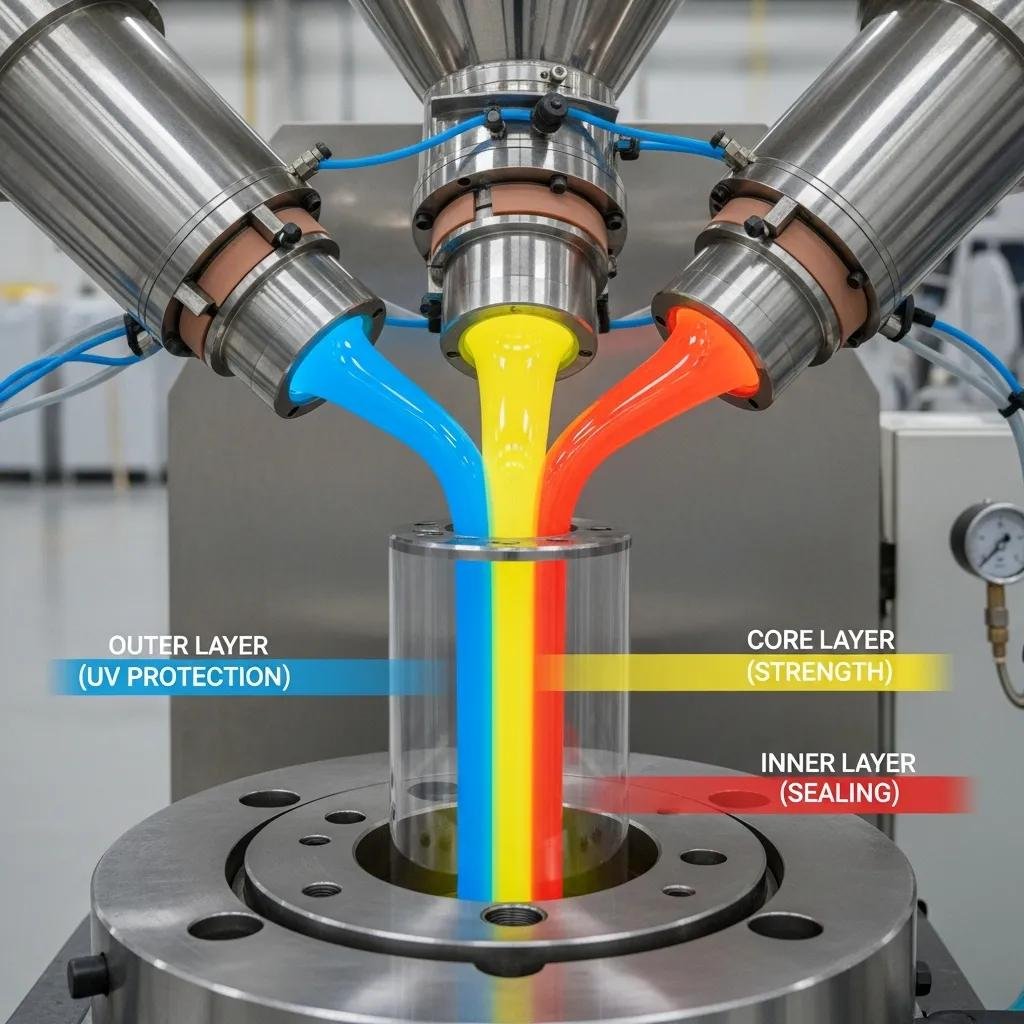
Co-extrusion merges multiple polymer melts into a single die so that the molten streams form discrete layers within a common tubular film; this is accomplished either with feedblocks or an integrated blown-film co-extrusion (IBC) arrangement. The process begins with resin feeding and melting, continues with gravimetric blending and metering to ensure consistent layer ratios, and ends with bubble inflation, cooling, collapse, and winding. Control systems such as gravimetric feeders, melt pumps, and automatic thickness control regulate layer uniformity and reduce scrap, while IBC or spiral die designs determine layer uniformity and barrier performance. Effective co-extrusion means each layer’s melt viscosity and temperature profile are matched to avoid interfacial instability and to ensure the intended barrier and mechanical properties in the finished film.
A typical 5 layer blown film line comprises five extruders (single- or twin-screw), a co-extrusion die head (feedblock or spiral/IBC die), air ring cooling and bubble stabilization systems, and precision winders with layflat control to produce uniformly wound reels. Extruder selection affects melting capacity and handling of specialty resins such as recycled materials or biodegradable polymers; for example, twin-screw extruders excel at compounding and processing filled or recycled blends. Die head design governs layer integrity—spiral/IBC dies often deliver better layer distribution for barrier layers like EVOH or nylon—while servo-controlled winders and nip systems control film tension and winding quality for downstream converting. Choosing the right combination of extruder L/D, die architecture, and winding hardware is crucial for reliable high speed blown film extrusion and repeatable production.
Technical specifications define a 5 layer blown film line’s production capability, film geometry range, and automation level, which together determine whether a machine fits a specific manufacturing plan. Key numeric parameters include output capacity (kg/h), film thickness range (microns), layflat width and maximum bubble diameter, and installed electrical power; automation and control features—gravimetric blending, automatic thickness control (ATC), PLC/HMI integration—drive quality and reduce material waste. Buyers should evaluate throughput bands relative to their target SKUs and map film width and layflat to finished pouch or bag dimensions. The following table compares feature groups and typical attribute ranges to help narrow choices during vendor selection.
| Machine Class | Output Capacity (kg/h) | Film Width / Layflat | Automation Features |
|---|---|---|---|
| Entry Multi-Layer | 300–700 | 600–1200 mm | Basic PLC, manual feeders |
| Mid-Range 5 Layer | 700–1200 | 800–1600 mm | Gravimetric blending, ATC, HMI |
| High-Speed Line | >1200 | 1000–2000 mm | Full automation, closed-loop control |
These categories help manufacturers align production goals with equipment investments; for instance, a packaging converter targeting large pouch runs will prefer mid-range to high-speed lines with ATC to guarantee uniform seal performance. Evaluating these attributes relative to raw-material plans and target volumes enables informed specification and supplier comparison.
Output capacity and film width map directly to commercial throughput and SKU flexibility; lower-capacity lines suit short runs and varied SKUs, while high-speed lines deliver economies of scale for continuous, large-volume production. Typical output bands for 5 layer lines range from approximately 300 kg/h for entry configurations up to and above 1,200 kg/h for high-speed systems optimized for multi-layer barrier film production. Automation features such as gravimetric blenders, automatic thickness control, and PLC/HMI systems reduce process variability, minimize scrap, and enable consistent layer ratios—advantages critical when producing barrier films with tight tolerances. Selecting appropriate automation thresholds depends on production goals: invest in closed-loop controls when consistent film properties and low material loss are business priorities.
Energy efficiency in modern blown film extrusion lines is achieved through optimized screw profiles, energy-efficient drives such as servo motors, and heat recovery where applicable, which together lower power consumption per kilogram of film produced. Quality assurance practices include inline monitoring, 100 percent final inspection routines, and standardized acceptance tests to validate barrier and mechanical performance before shipment. Manufacturers offering explicit warranty terms signal confidence in build quality; for example, some suppliers provide a two-year warranty and assert full final inspection prior to delivery, which translates into reduced early-life operational risk for buyers. These energy and QA considerations influence total cost of ownership and should be weighed alongside upfront machine pricing when evaluating proposals.
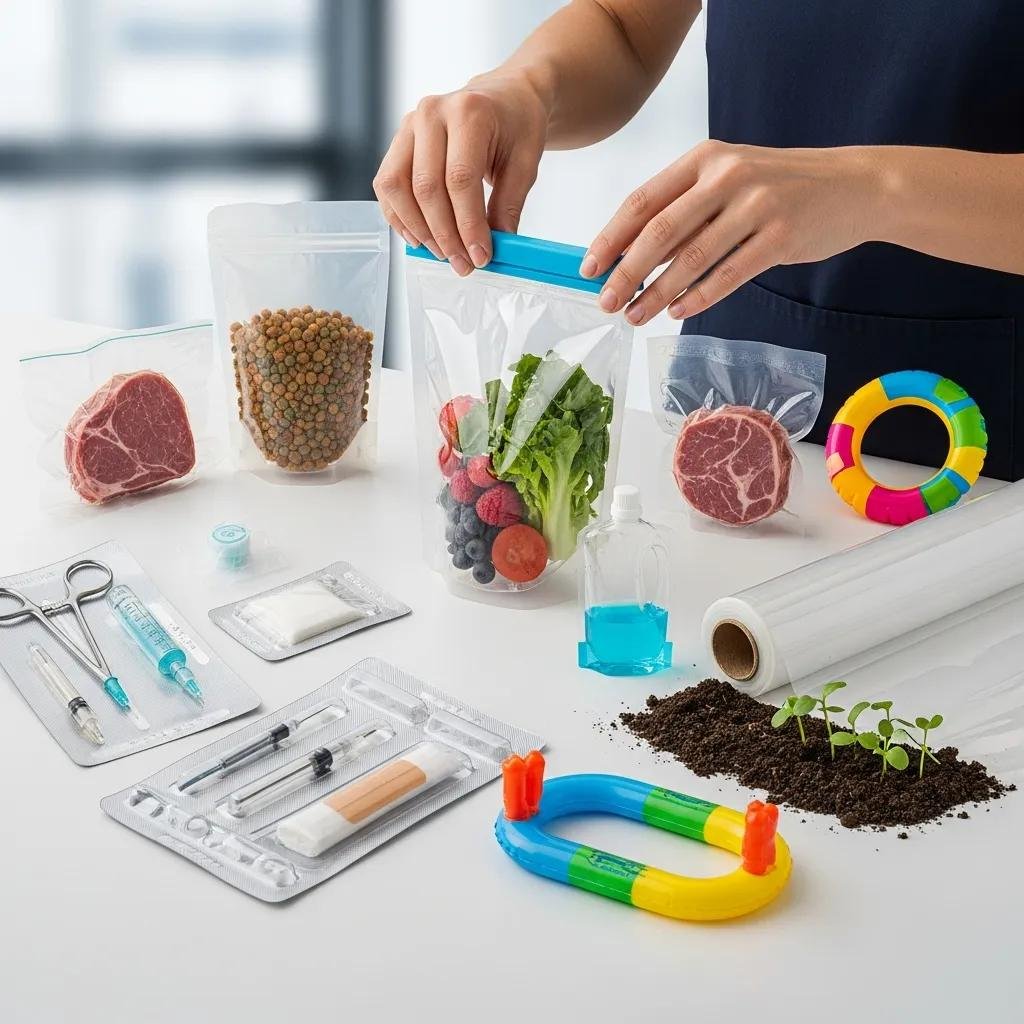
Advanced 5 layer blown film lines serve a wide range of markets where selective barrier performance, mechanical strength, and sealability are required, including flexible food packaging, medical barrier films, industrial sacks, agricultural films, and applications where biodegradable or recycled-content films are desired. Multi-layer structures allow thin functional barrier layers—EVOH or nylon—to deliver oxygen and aroma protection while outer PE layers provide sealability, abrasion resistance, and printability. The ability to specify layer materials and thicknesses makes 5-layer solutions particularly valuable for converters in Nigeria who need to balance cost, shelf life, and regulatory requirements for food and medical products. The next sections detail specific application examples and material recommendations for each use-case.
These application categories illustrate how multi-layer design aligns material function with end-use requirements; the following subsection focuses on food and medical barrier implementations and regulatory-driven performance choices.
Food and medical packaging demand reliable barrier performance to extend shelf life, protect against oxygen and moisture ingress, and maintain sterile conditions; 5 layer films achieve this by incorporating functional barrier layers between structural carrier layers. Common end-use examples include vacuum pouches, retort-capable laminations, high-barrier lidding, and sterile medical pouches, each requiring specific layer sequencing and material choices to meet regulatory and shelf-life targets. For instance, an EVOH barrier layer paired with tie layers and LLDPE outer layers creates a structure that controls oxygen permeability while enabling heat-sealability and puncture resistance. Choosing the right material stack and processing conditions ensures packaged goods retain quality during transport and storage, which is critical for distributors and retailers serving Nigerian markets.
Industrial and agricultural applications benefit from multi-layer lines by combining mechanically robust outer layers with inner barrier or anti-block layers to resist abrasion, UV exposure, and soil contact; typical examples include woven film laminations for sacks, heavy-duty shrink films, and agricultural mulch films. For sustainable solutions, machines must handle recycled resins and biodegradable polymers—this requires screw designs and feeding systems optimized for variable melt viscosities and contamination tolerance. Recycled-content processing often mandates dedicated feeding lines and careful temperature control to avoid odor and thermal degradation, while biodegradable film extrusion benefits from precise melt management to retain polymer integrity. Selecting a machine capable of flexible material handling increases a producer’s ability to pivot between conventional, recycled, and biodegradable product lines.
In Nigeria’s market context, 5 layer technology enables local converters to produce higher-value packaging that meets regional logistics and shelf-life needs while allowing for competitive pricing through material optimization and production efficiency. This practical alignment of technology and market demand naturally leads into supplier selection considerations and available vendor services.
China Evergreen Machinery Co., Ltd. (also known in markets as Kingdom Machinery) positions itself as a supplier of advanced multi-layer co-extrusion blown film machines with a global footprint and specific service offerings tailored to international customers. The company highlights strengths including competitive pricing, customization options for machine configuration, fast delivery to named Nigerian cities, and after-sales service commitments that support installation and operational ramp-up. Buyers assessing suppliers should weigh these vendor-provided value propositions—such as 100 percent final inspection, a two-year warranty, and dedicated R&D support—against their production targets to evaluate overall fit. The following points summarize the vendor attributes that matter most when comparing proposals and planning procurement.
China Evergreen Machinery emphasizes competitive pricing paired with customization options that let buyers select extruder sizes, die types, and automation levels aligned with their business plans; customization affects price and lead time but enables optimized material usage and product differentiation. The company also states fast delivery capabilities and market presence in cities like Lagos, Kano, Ibadan, and Benin City, suggesting logistics channels and export experience for Nigerian clients. When planning procurement, buyers should request detailed itemized quotations showing how configuration choices influence cost and delivery timelines so they can balance capital outlay with expected production benefits. Clear specification alignment reduces rework during installation and accelerates time-to-production once equipment arrives.
After-sales service offerings and warranty terms matter for long-term uptime; China Evergreen Machinery advertises a two-year warranty and a full final inspection prior to shipment, which helps mitigate early operational risk and supports smooth commissioning. Service scope typically includes installation guidance, operator training, and spare-parts provisioning; potential buyers should confirm response times, local technical support arrangements, and spare-parts lead times to ensure sustainable operations. While specific client success stories are not listed here, collecting references and performance metrics during vendor evaluation can provide practical evidence of installation outcomes and equipment reliability in similar operating environments.
Barrier film technology significantly improves a film’s ability to block oxygen, moisture, and aroma transfer, thereby extending shelf life, preserving product quality, and enabling thinner overall constructions that reduce material costs. By placing a dedicated barrier layer—such as EVOH or nylon—within a multi-layer stack, manufacturers achieve low oxygen transmission rates while outer PE layers maintain sealability, toughness, and printability. The combination of selective barrier chemistry and layer thickness control produces films tailored to specific products (e.g., fresh produce versus pharmaceutical-grade packaging) and shipping conditions. The table below maps common barrier layer materials to their primary properties and the resulting effects on film performance for quick technical comparison.
| Barrier Layer Material | Primary Property | Effect on Film Performance |
|---|---|---|
| EVOH | Excellent oxygen barrier | Extended shelf life, low OTR |
| Nylon (PA) | High puncture resistance, good barrier | Improved durability, aroma control |
| PE (tie/outer) | Sealability and toughness | Strong seals, processability |
| Biodegradable polymers | Compostability potential | Reduced environmental impact, processing caveats |
Barrier films reduce oxidation and moisture-driven spoilage by limiting gas and vapor permeation through selective layer chemistries and precise thickness control; the result is extended shelf life and preserved sensory attributes for perishable goods. For example, high-barrier films with EVOH are often used for oxygen-sensitive foods, whereas nylon layers provide puncture resistance for meat and cheese packaging. Multi-layer designs also allow for functional additions such as anti-fog layers or UV stabilizers without compromising barrier performance. Selecting the appropriate barrier stack requires mapping product sensitivity to target oxygen transmission rates and testing under expected storage and transport conditions.
Common layer materials include LLDPE and HDPE for structural and sealing layers, EVOH and nylon for barrier functionality, and tie-layer polymers to bond dissimilar plastics; each material has specific processing windows and melt characteristics. Biodegradable and compostable polymers can be integrated as one or more layers to reduce environmental impact, but they often require specialized handling and may impact film properties such as seal strength and elasticity. Producers should assess compatibility of selected resins with extruder screw profiles, die clearances, and downstream converting processes to ensure stable production. Proper material selection balances barrier performance, mechanical needs, recyclability goals, and processing feasibility.
Transparent pricing and a structured quotation process enable buyers to compare offers and plan capital budgets, shipping, installation, and training for a new 5 layer blown film line. An accurate quote requires clear specification of target output, film structure (layer materials and thickness), desired automation level, optional features (e.g., gravimetric blending, ATC), and delivery destination so suppliers can provide itemized costs and realistic lead times. The following checklist outlines the essential information to include when requesting a formal quotation, and a short EAV-style table summarizes typical service and cost elements buyers should expect to negotiate.
Please supply the following when requesting a machine quotation:
| Service / Cost Item | Scope | Typical Condition or Timing |
|---|---|---|
| Machine Price | Base equipment cost per configuration | Depends on customization and automation |
| Shipping & Logistics | Port/export handling to Nigeria | Lead time varies by route and documentation |
| Installation & Training | On-site assembly and operator training | Usually scheduled after delivery; time depends on complexity |
| Warranty & After-Sales | Coverage terms (e.g., two-year warranty) | Warranty activation after final inspection and commissioning |
| Spare Parts Provision | Critical spare-parts list and lead times | Supplier to advise stock and lead times |
This breakdown clarifies which cost elements are variable and what buyers should confirm in quotations; a negotiated itemized quote reduces surprises during procurement and commissioning.
To obtain an accurate quotation, requesters should submit the checklist items above and ask suppliers for an itemized breakdown that separates machine base price, optional features, shipping, installation, and warranty coverage. Lead times depend on customization level and current production schedules; buyers should ask for estimated delivery windows and clarify logistics to Nigerian cities named earlier to align internal project timelines. When comparing proposals, evaluate total cost of ownership metrics such as energy consumption, projected scrap rates, and spare-parts availability in addition to upfront price. Clear specifications and comparison criteria yield faster, more accurate vendor responses and smoother procurement.
Installation typically includes on-site assembly, mechanical and electrical commissioning, and operator training to achieve production readiness; suppliers often provide structured training modules and initial run support to hand over operational responsibility. Preventive maintenance schedules and spare-parts kits should be planned based on expected running hours and local service capacity to minimize downtime; confirm recommended spare-part lists and typical replacement intervals with the supplier. After-sales support arrangements—warranty terms such as a two-year warranty, response times for technical assistance, and availability of remote troubleshooting—determine long-term uptime and should be explicitly included in the contract. Ensuring these service elements are agreed before purchase protects production continuity and secures predictable operating costs.
These action points help buyers secure reliable operations after equipment arrival and commissioning, enabling faster return on investment and smoother scale-up of film manufacturing capacity.
Plastic Machine Deli
Comprehensive Guide
Plastic Machine Succ
Find Plastic Machine