
Plastic Machine Delivery and Logistics to Nigeria
Plastic Machine Deli
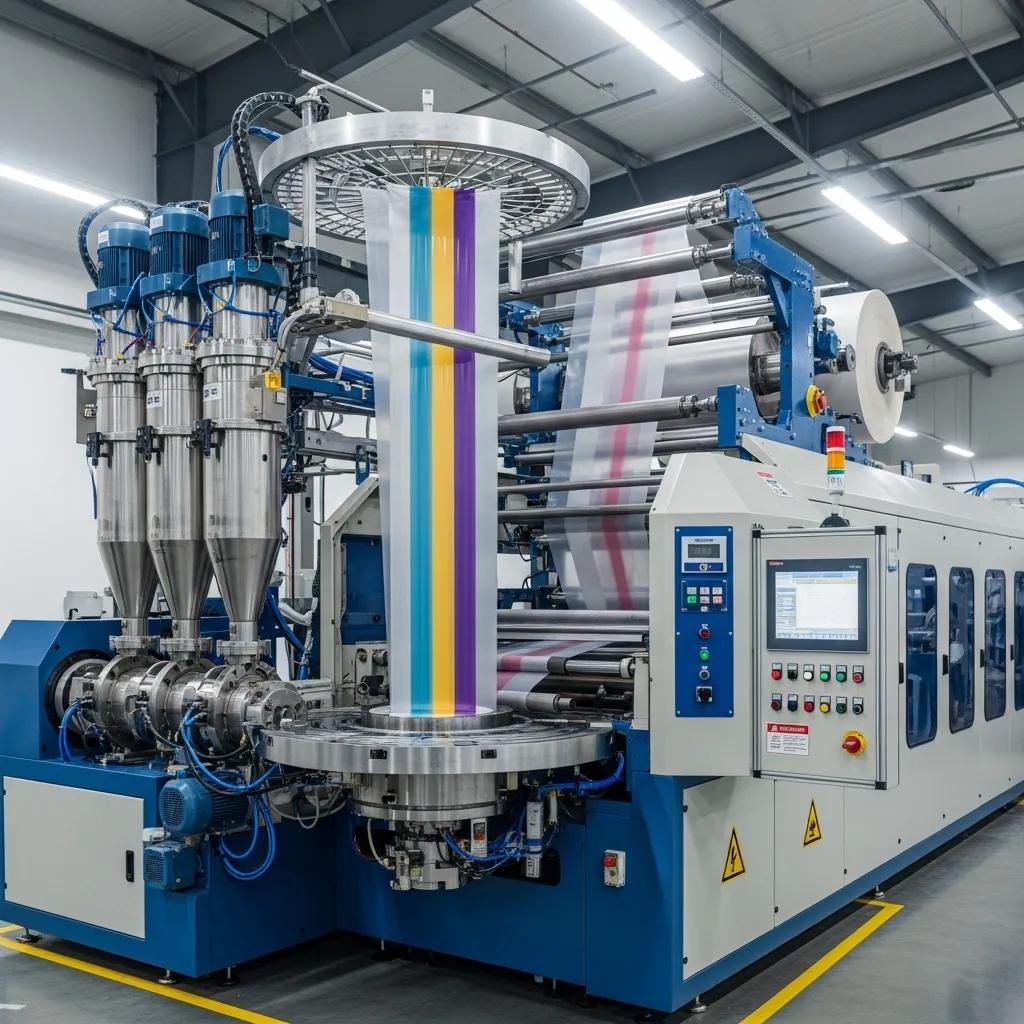
Advanced multi-layer co-extrusion blown film machines combine multiple extruders, a co-extrusion die head and precise cooling to produce tailored films with layered functionality for packaging and industrial use. This guide explains the core technology, key machine features such as internal bubble cooling (IBC) and gravimetric dosing, and the measurable benefits that multi-layer constructions deliver for barrier performance, strength and cost efficiency. Many manufacturers need clarity on choosing between 3-layer, 5-layer and 7-layer systems, selecting polymers, and specifying features that handle recycled content or food-grade films; this article provides that decision-grade detail. Readers will find step-by-step process descriptions, comparative EAV tables to pick the right layer configuration, and localized application guidance for Nigeria’s market including recommended machine configurations and purchasing considerations. Technical sections cover how IBC, gravimetric dosing and automation improve thickness control and film consistency, while commercial sections outline supplier value propositions and buying signals for procurement teams. Throughout, the article weaves practical guidance, lists of actionable points, and tables designed to make machine selection and specification straightforward for production managers and engineers.
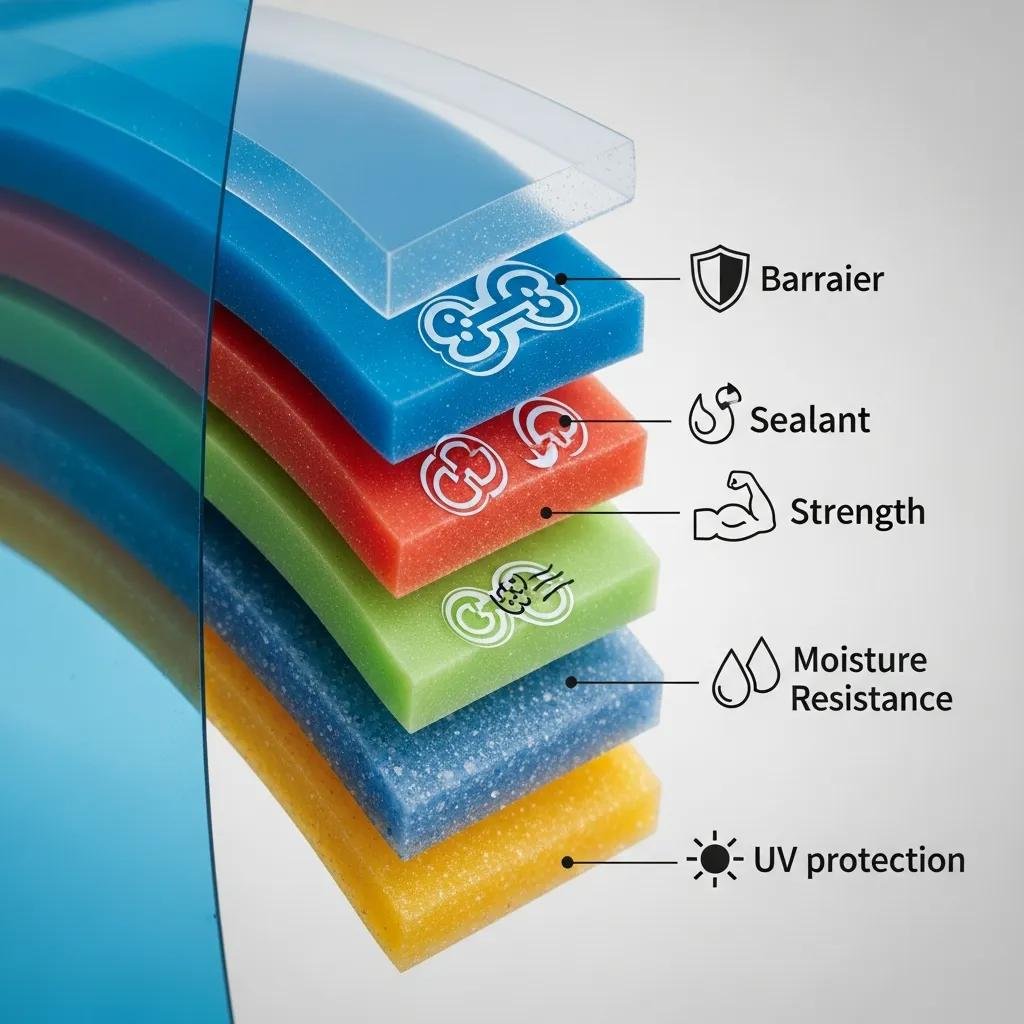
Advanced multi-layer co-extrusion blown film technology is a process where two or more extruders feed distinct polymer melts into a single co-extrusion die head to form a unified tubular film with discrete functional layers. The mechanism relies on controlled melt flow rates, die geometry, and bubble formation to arrange layers (for example, sealant, barrier, and strength layers) so each contributes targeted properties like oxygen barrier or puncture resistance. The principal value is the ability to combine different polymers such as LDPE, LLDPE, EVOH and PA within one continuous process to replace laminations and deliver consistent, single-step film production. The next section outlines the stepwise process so buyers and operators can see how component choices map to film outcomes.
Co-extrusion in blown film lines starts with multiple extruders melting different polymers and metering them to a multi-manifold co-extrusion die head, where melts are layered concentrically before forming a bubble. Precise control of extruder screw speed, temperature, and gravimetric dosing ensures target layer thicknesses and material ratios, which determine barrier and mechanical properties. After the die, the melt is inflated into a bubble and cooled—often using internal bubble cooling (IBC) and external air rings—to set crystallinity, optical clarity and gauge uniformity while the haul-off controls film orientation. Effective coordination between die design and downstream cooling/drawdown yields consistent film gauge and performance, enabling repeatable production for food packaging, agricultural film and industrial applications.
Interface Analysis of Three-Layer Co-extrusion Blown Film
ABSTRACT: The three-layer co-extrusion blown film could combine a variety of different characteristics in the extrusion process and significantly decreased cost, therefore this technology is being applied more and more broadly. The flow channel geometry of three-layer co-extrusion blown film die was built and then meshed by ICEM CFD with all-hexahedral elements whose flow field numerical simulation was solved by POLYFLOW to analysis the interface shape and position for LDPE/HDPE/LDPE three-layer co-extrusion blown film. It shows that the interface fluctuates when each layer met in the co-extrusion channel. The differential pressure of two adjacent layers bring about interfacial deformation, interface position changes due to the flow channel rearrangement when each layer met the co-extrusion channel.
Interface analysis of three-layer co-extrusion blown film, 2019
Modern multi-layer blown film machines integrate a range of features that directly influence product quality and operational efficiency, such as IBC units, gravimetric dosing, auto-thickness control, and user-friendly HMI automation. Internal bubble cooling (IBC) refines optical clarity and reduces thickness variation by controlling the melt cooling profile inside the bubble, while gravimetric dosing maintains consistent material ratios to within tight tolerances for barrier layers. Auto-thickness control and closed-loop feedback from in-line gauges reduce scrap and speed setup for different recipes, and modular multi-extruder designs (3-, 5-, 7-layer) let manufacturers scale complexity based on product requirements. Understanding how these features interact helps buyers prioritize upgrades that reduce waste and improve film performance.
These features collectively shape film characteristics and production economics, and the following section examines the specific benefits that multi-layer co-extrusion delivers.
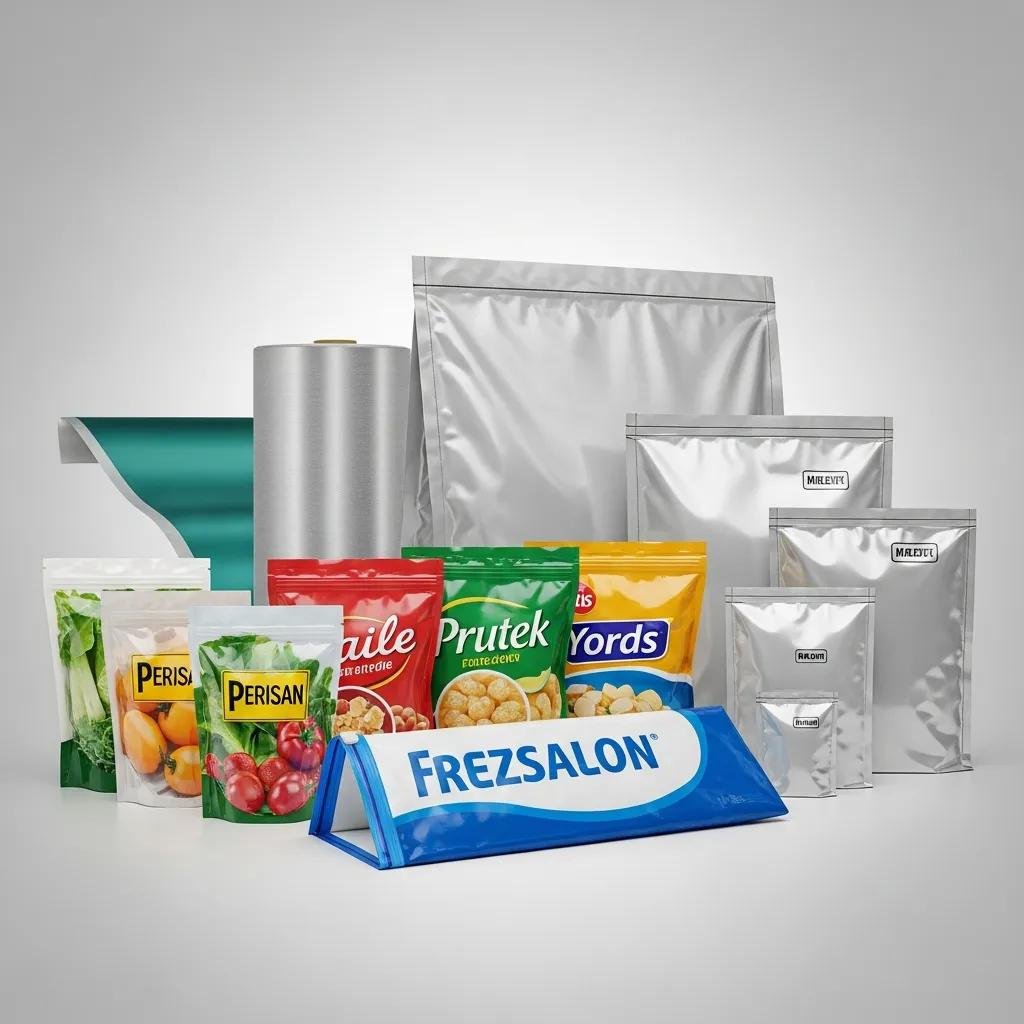
Multi-layer co-extrusion delivers improved product performance and manufacturing efficiency by combining polymer functionalities into single-film constructions that meet application-specific requirements. The mechanism—stacking functional layers such as EVOH for oxygen barrier, PA for puncture resistance and LDPE for heat sealability—allows targeted use of costly materials only where needed, reducing raw-material cost while achieving high barrier and mechanical properties. Production benefits also include elimination of secondary lamination steps, faster line throughput, and the ability to incorporate reclaimed content in core or outer layers to lower cost and improve sustainability. Below are explicit benefits framed as actionable outcomes for production teams evaluating equipment.
Multi-layer co-extrusion offers primary advantages:
Following these benefits, many buyers choose machines with gravimetric dosing and IBC to realize material savings and consistency in production, and the next section links these technical advantages to procurement options.
For manufacturers considering equipment suppliers, FILM BLOWING MACHINE NIGERIA provides a product range aligned to these benefits and supports buyers with quality assurance and delivery services. The company emphasizes simple operation, perfect performance, easy maintenance, and timely after-sales service, with product lines focused on blown film extrusion including double-layer and double-color blown film extrusion systems. Their stated value propositions include a rigorous final inspection process, a low reported defective rate, warranty coverage for specific components, strong R&D support, and competitive pricing with fast delivery—attributes that help bridge technical capability to commercial adoption in local markets.
Layer count determines complexity, die design and the precision of layer placement, which in turn affects film functionality and cost. A 3-layer machine typically supports simple ABA or ABC structures suited to basic sealing and moderate barrier, a 5-layer line is an industry-standard compromise enabling a dedicated barrier plus protective outer layers, while a 7-layer system allows complex architectures with multiple barrier/tie layers and optimized adhesive/toughness combinations. Choosing the right configuration depends on target film properties, budget and downstream processes; the table below summarizes these trade-offs to help buyers decide.
The following table compares common configurations and their typical applications:
| Layer Configuration | Typical Materials / Purpose | Common Applications & Film Properties |
|---|---|---|
| 3-layer (ABA/ABC) | LDPE / LLDPE outer + LLDPE core for strength or easy-seal | Simple bags, garbage bags, basic food wrap; good sealability and clarity |
| 5-layer | Outer protective layers + EVOH/sandwiched barrier + tie layers | Food barrier pouches, high-clarity packaging; balanced barrier and strength |
| 7-layer | Multiple barrier layers, tie layers, and mechanical-strength layers (PA, EVOH, HDPE) | High-performance barrier films, heavy-duty industrial sacks, laminated replacements |
Layer architecture influences oxygen/moisture barrier, sealability, optical clarity, stiffness and puncture resistance by distributing functional roles across the film cross-section. For example, placing EVOH centrally reduces oxygen transmission while outer LDPE or LLDPE layers preserve sealability and surface gloss, and nylon layers add tear resistance. Increased layer counts provide finer control over each property—7-layer films can deliver near-laminate barrier without separate lamination—while 3-layer lines are cost-effective for commodity-grade films. Selecting layer configuration thus balances required film performance against line cost, maintenance complexity and operator skill level.
Industry-grade multi-layer films typically combine a small set of polymers selected for complementary functions: LDPE/LLDPE for sealability and flexibility, HDPE for stiffness, EVOH for oxygen barrier, and PA (nylon) for puncture resistance. Tie layers or compatibilizers ensure adhesion between incompatible polymers, preserving mechanical integrity of the laminate. Food packaging prioritizes food-contact grades and clarity (LDPE/LLDPE + EVOH + tie layers), agricultural film focuses on UV-stabilized LLDPE blends for durability and cost, and industrial bags use thicker HDPE/PA combinations for load-bearing strength. Understanding polymer roles helps engineers specify resin grades and layer percentages for target properties.
These polymer choices influence extruder screw selection, die metallurgy and cooling strategies discussed next.
In Nigeria, primary applications for multi-layer blown film include food packaging, agricultural films (mulch and greenhouse sheeting), and industrial sacks and bags for bulk handling and distribution. Market drivers such as expanding retail packaging, growing agribusiness needs, and demand from e-commerce create appetite for films that extend shelf life, reduce leakage and improve package aesthetics. Nigerian buyers often prioritize machines that balance performance with serviceability—compact multi-extruder configurations, accessible spare parts, and straightforward controls are valuable features for local operations. The table below maps industry segments to recommended machine configurations to aid purchasing decisions.
| Industry Segment | Typical Film Spec | Recommended Machine Configuration / Throughput |
|---|---|---|
| Food packaging | 20–80 µm, oxygen/moisture barrier, high clarity | 5-layer co-extrusion with EVOH core, IBC, gravimetric dosing |
| Agriculture (mulch/greenhouse) | 50–200 µm, UV-stabilized, puncture resistance | 3- or 5-layer LLDPE blends, robust extruders, cost-effective dies |
| Industrial sacks/bags | 100–300 µm, high tensile/puncture strength | 5-7 layer with PA or HDPE load-bearing layers, high-torque extruders |
Food packaging requires tight control of barrier properties and seal performance, often achieved using EVOH or multilayer tie-layer architectures to extend shelf life for processed foods. Agricultural films need UV stabilization, cost-effective polymer blends and puncture resistance to survive field conditions while keeping costs low for farmers. Industrial sacks demand high tensile strength and puncture/pull-through resistance for transporting bulk goods; these typically use thicker constructions with nylon or HDPE reinforcement layers. Machine features such as higher-torque extruders, robust winding systems, and IBC for gauge control are practical enablers for these applications.
Nigeria’s expanding retail and agricultural sectors increase demand for locally produced packaging and film products, prompting manufacturers to invest in lines that improve product quality and reduce reliance on imported finished films. Growth in e-commerce and formal food retail raises expectations for shelf-ready packaging, increasing the need for barrier films and higher-clarity materials. Investment decisions thus weigh expected throughput growth against capital cost; modular 5-layer systems often provide the best balance for scaling operations, while larger manufacturers targeting advanced barrier products may move directly to 7-layer lines for competitive advantage.
Key enabling technologies such as internal bubble cooling (IBC), gravimetric dosing, automatic thickness control and advanced HMI/automation work together to improve film uniformity, reduce waste and enable predictable production. IBC controls cooling rates internally, producing improved optical clarity and more uniform crystallization across the film cross-section, while gravimetric dosing maintains accurate polymer ratios across production runs for consistent barrier performance. Automation and AI-enabled monitoring deliver recipe recall, process alarms, and data-driven predictive maintenance that reduce unplanned downtime. The following table explains machine features and their direct benefits to production and film quality.
| Machine Feature | What it Does | Benefit for Film Quality / Production |
|---|---|---|
| Internal Bubble Cooling (IBC) | Controls internal bubble air and temperature | Improves optical clarity, reduces thickness variation |
| Gravimetric Dosing | Metered weight-based resin feeding | Maintains exact layer ratios; reduces material waste |
| Auto Thickness Control | Closed-loop gauge feedback to adjust drawdown | Keeps gauge tolerance tight; lowers scrap rates |
Internal bubble cooling (IBC) modifies the thermal gradient inside the bubble, providing more uniform cooling and improved film clarity and gloss; operators report tighter gauge profiles and reduced birefringence when IBC is properly tuned. Gravimetric dosing delivers material to extruders by weight rather than volumetric estimates, eliminating drift in layer ratios across long production runs and enabling precise placement of costly barrier polymers only where needed. Together, IBC and gravimetric control can lower thickness variance, reduce rejected film, and conserve expensive barrier resins, translating into measurable savings and more consistent customer products.
Automation and AI systems provide recipe management, real-time process optimization, and predictive maintenance by analyzing sensor streams from temperature controllers, motor loads and thickness gauges over time. These systems shorten setup times via stored recipes for different layer recipes and facilitate quick changeovers between film types without long trial runs. Predictive algorithms flag component wear or process drift before failure, improving uptime and lowering maintenance costs. The integration of HMI with remote diagnostics also enables faster troubleshooting and operator training, enhancing operational efficiency in local production environments.
These feature-driven improvements support a supplier strategy that couples machine capability with local service and spare parts availability.
FILM BLOWING MACHINE NIGERIA positions itself as a supplier focused on blown film extrusion equipment with an emphasis on simple operation, reliable performance and responsive after-sales support tailored for Nigerian buyers. The company highlights quality assurance through a 100 percent final inspection process and reports a low defective product rate; specific warranty coverage—such as a two-year warranty for timer switches—is cited as part of its component-level guarantees. FILM BLOWING MACHINE NIGERIA also stresses strong R&D capability, one-stop service offerings that can include downstream equipment alignment, and competitive pricing with fast delivery to reduce buyer lead time and installation delays. The following subsection summarizes the offered quality assurance and practical buyer benefits to help procurement teams evaluate vendor fit.
The vendor emphasizes rigorous quality control workflows with full final inspection on machines prior to shipment to ensure operational readiness and to minimize defects upon installation. Reported defect rates and component warranties give buyers predictable risk profiles; the two-year warranty for timer switches is an explicit example of covered items, while spare parts, training and maintenance support are positioned as part of one-stop service. Fast delivery and local enablement—through spare parts availability and technical support—help Nigerian manufacturers reduce downtime and accelerate commissioning, making the procurement decision more operationally certain.
Competitive pricing reduces capital expenditure and shortens the payback period, enabling smaller producers to access multi-layer capabilities that were previously cost-prohibitive. Fast delivery and responsive spare parts supply shorten lead times and time-to-market for new product lines, reducing inventory risk and enhancing flexibility to respond to market demand. By pairing accessible pricing with local-oriented service, suppliers lower the total cost of ownership for buyers, enabling quicker ROI and more rapid scaling of production in response to Nigeria’s growing packaging and agricultural markets.
These steps convert technical needs into commercial outcomes, helping buyers match machine capability to business goals.
Competitive pricing combined with prompt delivery minimizes capital waiting time and accelerates production launches, reducing the time between investment and revenue generation. When machines arrive and are supported quickly, manufacturers can test new film recipes, iterate packaging designs and capture market share without extended procurement-related delays. The overall result is a lower total cost of ownership through reduced downtime, faster product-to-market cycles, and improved operational predictability for Nigerian film producers.
These commercial advantages reinforce technical decisions and help operational teams justify machine investments.
Plastic Machine Deli
Comprehensive Guide
Plastic Machine Succ
Find Plastic Machine