
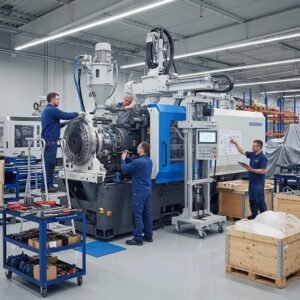
Plastic Machine Delivery and Logistics to Nigeria
Plastic Machine Deli
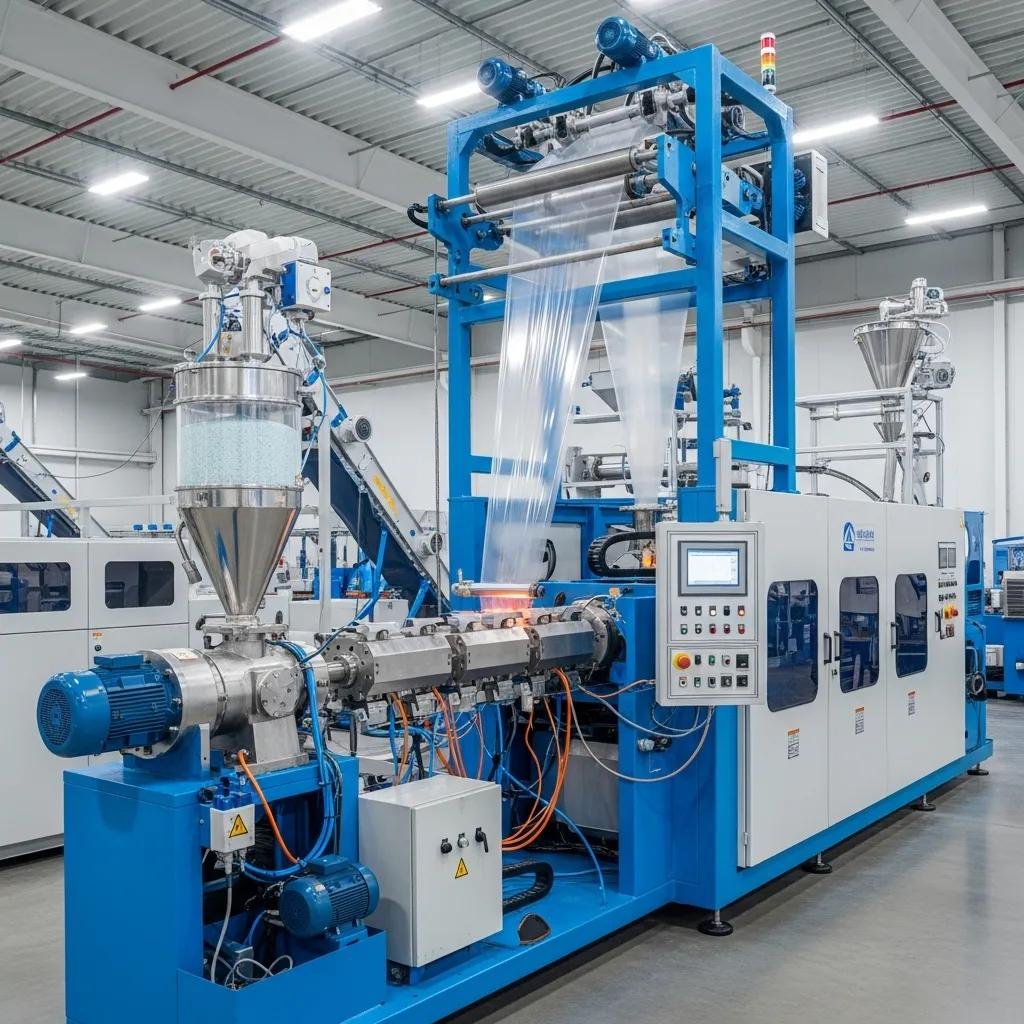
Low-density polyethylene (LDPE) blown film extrusion is a core manufacturing process for producing flexible plastic films used across packaging, retail, agriculture, and waste management. This guide explains what an LDPE blown film extruder is, how the process converts resin into a stable film bubble, and why Nigerian manufacturers rely on blown film extrusion equipment to meet diverse local demands. Readers will learn the mechanical steps, component functions, machine types, market uses in Nigeria, and practical criteria for selecting and installing equipment suited to target products and production scales. The article maps key sections that follow: a concise process overview and featured steps, a comparison of machine families and their applications, the essential components and advanced features that determine film quality, Nigerian market uses and trends for 2025, a buyer’s checklist for investing in extrusion equipment, and best practices for installation and after-sales support. Throughout, terms like ldpe blown film extrusion, multi-layer blown film extruder, biodegradable blown film machine, and blown film machine price Nigeria are used to help technical and commercial searchers find actionable information.
An LDPE blown film extruder is an extrusion machine that melts and shapes low-density polyethylene resin into a continuous tubular film by forcing molten polymer through an annular die and inflating it into a controlled bubble. The mechanism combines precise melting and mixing in the extruder screw, controlled extrusion through the die lip, and air-ring cooling to stabilize the bubble, producing film that is collapsed and wound for downstream converting. This process yields films with tunable thickness (gauge), mechanical properties, and surface characteristics suitable for shopping bags, garbage bags, lamination cores, and agricultural sheeting. Understanding the process mechanics clarifies why screw design, die geometry, cooling, and winding systems are critical control points for consistent LDPE film production.
The next paragraphs break the process into material characteristics and numbered operational steps that are essential for operators and buyers to monitor.
Low-density polyethylene is a thermoplastic polymer characterized by a branched molecular structure that gives it flexibility, toughness, and good sealability, which makes it well suited for blown film applications. LDPE typically produces films with high elongation, soft hand feel, and reliable heat-sealing performance, so converters often choose LDPE where flexibility and seal integrity matter more than tensile stiffness. Compared to LLDPE and HDPE, LDPE offers superior clarity and softer films at equivalent thicknesses, though LLDPE blends can improve puncture resistance and processability. Operators select LDPE grades, blends, and additives based on final product requirements such as clarity for retail bags or toughness for refuse sacks, and those material choices feed directly into extruder setup and die configuration.
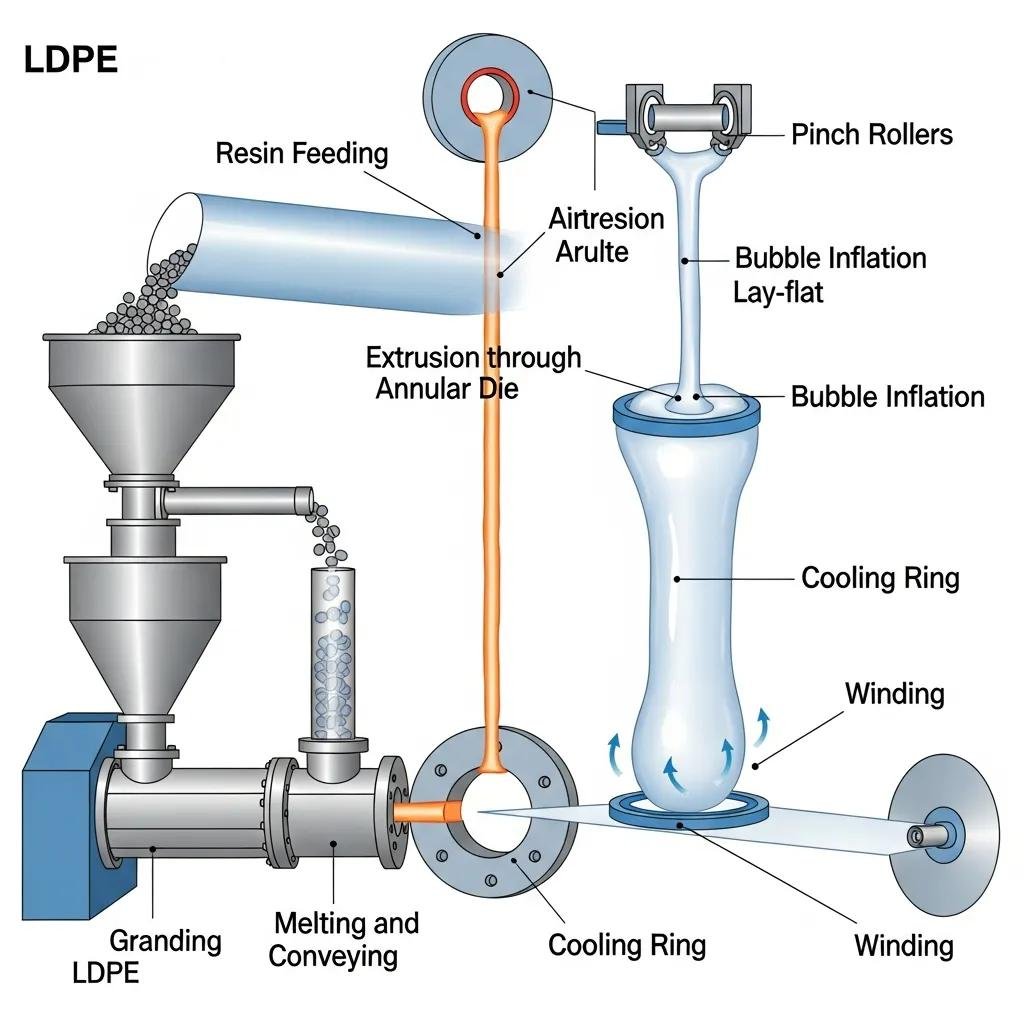
The blown film extrusion process follows a clear sequence from resin to roll, with control points at each stage that affect film quality and throughput. Below is a numbered, step-oriented process that captures the core stages and operational checkpoints for LDPE film production.
Monitoring melt temperature, motor load, frost line, and online thickness gauges at each step is essential for repeatable film production and consistent film blowing extrusion in Nigeria and beyond.
After outlining the process, it is useful to understand what types of blown film lines are available and how they match to product applications.
For manufacturers seeking equipment options, China Evergreen Machinery Co., Ltd. supplies blown film extrusion lines including standard single-layer, multi-layer, high-speed, and biodegradable-capable systems; their portfolio and customization options support a range of Nigerian production needs. The company emphasizes one-stop service with customization (logos, labels, packaging, new product development) and a robust R&D team of product, structural, software, and circuit engineers that supports tailored solutions. Manufacturing scale gives competitive pricing and rapid delivery: samples within 3 days, standard bulk 15–20 days, and customized lines 30–60 days. These supplier capabilities can be considered alongside technical requirements when selecting machinery for LDPE film blowing extrusion.
Blown film extruders come in families that differ by layer capability, throughput, and special features for sustainability or high-speed production; matching these types to product goals optimizes returns and reduces waste. Single-layer machines are simpler and cost-effective for basic retail and refuse bags, while multi-layer co-extrusion lines (ABA, three-layer, five-layer) enable barrier layers, tie layers, and functional films for more demanding packaging. High-speed blown film extrusion lines focus on higher throughput and stronger drive systems to increase kg/h output, improving unit economics for large-volume converters. Biodegradable-capable and PCR-capable lines incorporate material-handling and processing features to accommodate sensitive resins. Understanding these categories helps Nigerian producers select the right machine family to meet product specifications and market demand.
Below is a quick comparison table that maps common machine types to outputs and typical Nigerian applications.
| Machine Type | Typical Output (kg/h) | Layers | Typical Applications |
|---|---|---|---|
| Single-layer blown film extruder | 100–300 | Single | Shopping bags, light-weight retail bags |
| Multi-layer (3-layer ABA) blown film extruder | 200–600 | 3 | Barrier films, printed retail bags, lamination films |
| Five-layer blown film extrusion line | 300–1200 | 5 | High-performance packaging, barrier + strength films |
| High-speed LDPE blown film machine | 400–1500+ | 1–5 | High-volume retail and industrial films |
| Biodegradable polymer blown film extruder | 100–500 | 1–3 | Compostable bags, sustainable packaging |
This comparison shows how layer count, throughput, and machine class align with Nigerian use-cases and helps narrow procurement choices for converters.
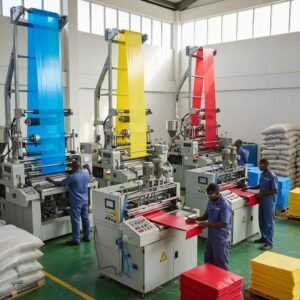
Single-layer blown film machines extrude one polymer composition through a single annular die, offering simplicity, lower capital cost, and easier color changes, which suits manufacturers producing standard retail and refuse bags. Multi-layer machines use co-extrusion to combine different polymers into functional layer stacks (e.g., LDPE/LLDPE/EVOH) that add barrier properties, heat-sealability, or improved mechanical strength without significantly increasing film gauge. While multi-layer systems are costlier and require more complex die heads and control systems, they deliver higher-performance films for packaging that must protect oxygen-sensitive goods or support printing and lamination. Given these trade-offs, buyers choose single-layer for commodity output and multi-layer for value-added film products.
Biodegradable-capable lines are engineered to handle compostable resins and blends that may have different melt viscosities and thermal sensitivities; these machines often include gentler melt channels, specialized screw designs, and precise temperature control to avoid degradation. High-speed LDPE blown film extrusion lines prioritize stronger reduction gears, higher-torque extruders, and robust winding systems to maintain film stability at elevated outputs, delivering better economics per kilogram produced. Both categories require attention to cooling, downstream converting, and quality control, since high throughput or sensitive resins can magnify defects that affect printing or bag-making operations. Producers should match downstream converting capacity to the extruder class to maintain workflow balance.
An LDPE blown film extruder is a system of interdependent components—screw and barrel, annular die head, air ring, collapsing frame, nip rollers, and winder—each affecting melt quality, bubble stability, and final roll integrity. Screw geometry and L/D ratio influence shear, melting, and mixing, so screw selection directly modifies throughput, melt homogeneity, and degradation risk. Die head design, including lip adjustment and concentricity control, governs film thickness uniformity, while the air ring and cooling determine the frost line and molecular orientation that affect mechanical properties. Finally, winder type (surface or center) and tension control establish roll density and readiness for converting operations. A clear map from component to performance aids procurement and maintenance planning.
The table below maps major components to their functions and the resulting effect on film quality and throughput.
| Component | Function | Effect on Film Quality / Throughput |
|---|---|---|
| Extruder screw & barrel | Melt, mix, and convey polymer | Determines melt homogeneity, throughput (kg/h), and thermal history |
| Annular die head | Shapes molten polymer into a tube | Controls thickness uniformity and bubble stability |
| Air ring / cooling system | Cools and stabilizes bubble | Sets frost line, orientation, and mechanical properties |
| Nip rollers & collapsing frame | Flatten bubble, control web | Affects edge alignment and winding profile |
| Winder (surface/center) | Wind finished rolls with tension control | Impacts roll density, layer adhesion, and downstream handling |
Extruder screws convert solid LDPE resin into a homogenous molten mass through localized shear, temperature control, and designed mixing zones; screw L/D and barrier/mixing sections determine residence time and dispersive/molecular mixing that affect film clarity and mechanical uniformity. The die head spreads the melt around an annular gap; precise lip control and polishing reduce die lines and thickness variation, contributing directly to film flatness. Air ring geometry and balance of internal/external cooling air maintain the bubble’s frost line and orientation. Winders—surface wound or center wound—use controlled tension and nip pressure to form stable rolls that are suitable for printing and bag-making. Proper coordination of these components produces consistent LDPE film suitable for demanding converting operations.
Modern blown film lines incorporate automation, closed-loop process control, and online measurement systems that reduce variability and operator dependence; PLC systems, often referenced generically as Siemens-type controls, centralize temperature profiling and process recipes. Online thickness gauges and automatic thickness control (ATC) correct die gaps in real time to maintain gauge uniformity, reducing scrap and improving yield. Energy-saving features such as optimized screw profiles, efficient motors, and regenerative heating controls lower operating cost while reducing thermal stress on resins. Predictive maintenance sensors and modular spare parts strategies also reduce downtime and extend service intervals. Investing in these features increases first-pass quality and long-term operational efficiency.
LDPE film in Nigeria serves core sectors including retail shopping bags, refuse and garbage bags, agricultural films, and flexible packaging for fast-moving consumer goods; lightweight clarity and reliable sealing make LDPE a default material for many converters. Demand drivers include urban retail growth, food packaging needs, and agricultural film applications where affordability and flexibility matter. Current trends for 2025 emphasize sustainability—greater interest in biodegradable and PCR-capable films—plus adoption of multi-layer films for stronger, printed packaging and a move toward automation to improve consistency and reduce labor dependence. These market forces encourage converters to consider multi-layer and biodegradable-capable machinery when planning medium- to long-term investments.
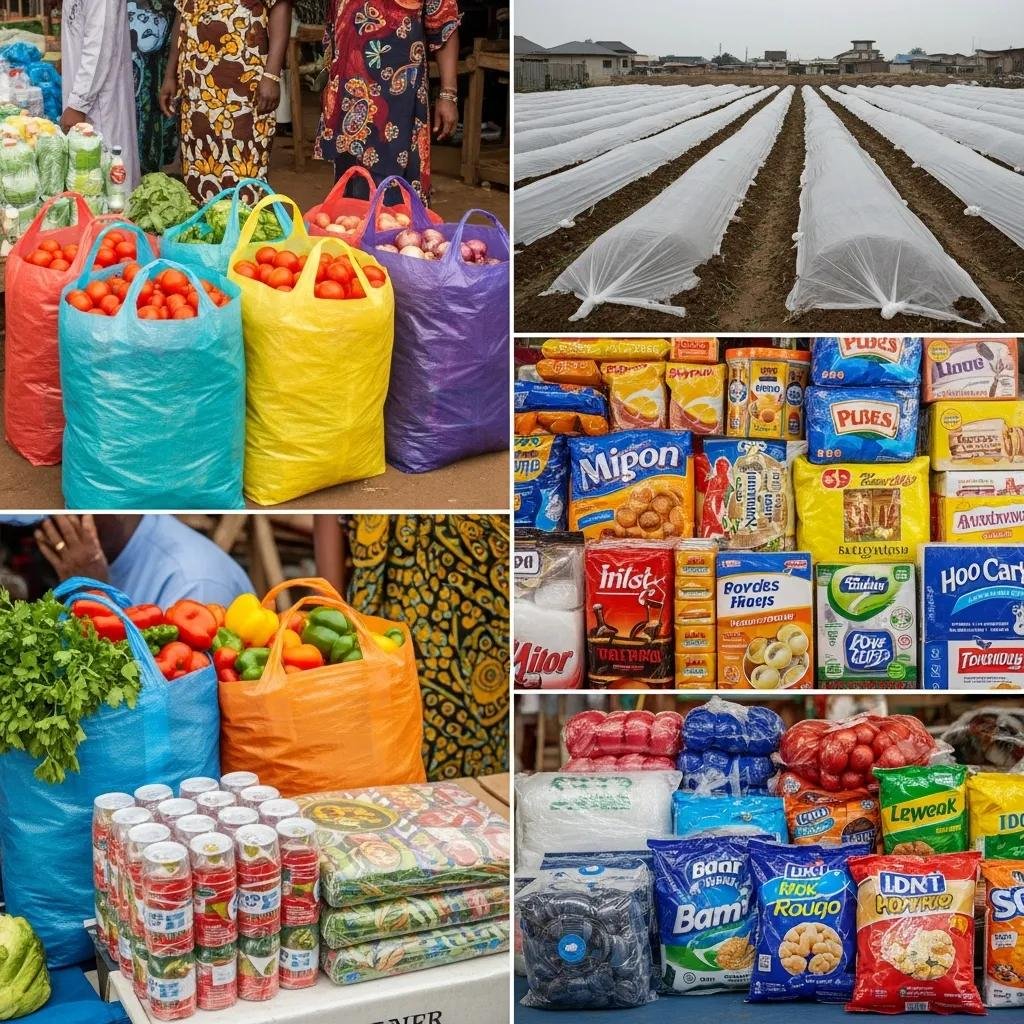
LDPE film applications in Nigeria include grocery and retail bags, refuse sacks, agricultural mulch and silage covers, and protective wrap for goods in transit; each application has distinct gauge, strength, and sealing requirements that influence machine and material selection. For retail bags, clarity and heat-sealability at low gauges matter; garbage bags need puncture resistance and thickness. Agricultural films emphasize UV stabilization and wider widths, often requiring winder and cooling arrangements for large rolls. Matching the specific application to a machine class—single-layer for basic retail, multi-layer for barrier or printed packaging—enables manufacturers to optimize material use and converting downstream.
Emerging trends in Nigeria for 2025 include increased interest in PCR (post-consumer recycled) resins and biodegradable film options, driven by regulation and buyer preference, which requires machines capable of handling variable resin qualities. There is also a shift toward multi-layer films that provide barrier and strength without excessive gauge increases, improving material efficiency. Automation and smart controls are becoming more common to ensure consistent output with smaller skilled labor pools. These trends influence procurement decisions: buyers now weigh sustainability compatibility, layer flexibility, and automation level alongside upfront cost and local support.
Selecting an LDPE blown film extruder requires evaluating capacity needs, layer configuration, material flexibility, automation level, and availability of spare parts and after-sales support. Capacity selection is driven by target throughput (kg/h), planned product mix, and downstream converting speed; screw diameter and motor sizing are central technical drivers of throughput. Layer capability determines whether you can produce simple commodity films or value-added multi-layer products. Local after-sales service, warranty terms, and spare parts logistics are critical for minimizing downtime and ensuring ROI. A checklist-style approach helps buyers compare suppliers and machine specifications before committing capital.
The table below clarifies common cost and selection factors and their impact on price and operations.
| Cost Factor | Impact on Price | Value / Notes |
|---|---|---|
| Screw diameter & L/D | Major driver | Larger screws increase throughput and motor size requirements |
| Layer capability (co-extrusion) | Significant | Multi-layer heads and extruders add complexity and cost |
| Automation level | Moderate to high | PLCs, ATC, and sensors raise capital but lower operating cost |
| Warranty & local service | Moderate | Reduces long-term downtime risk and spare-parts cost |
| Shipping/customs & installation | Variable | Adds to initial outlay; local commissioning reduces delays |
Prices for polyethylene film extruders are influenced by machine capacity (screw diameter and throughput), layer capability (single vs multi-layer), level of automation, and the inclusion of advanced features such as online thickness control and high-speed winders. Additional cost drivers include warranty terms, spare parts packages, and logistics such as shipping, customs, and local installation and training. Choosing a machine that matches the intended product mix minimizes wasted capital; conversely, over-specifying capacity or unnecessary features increases purchase price without commensurate benefit. Careful total-cost-of-ownership analysis helps Nigerian buyers predict payback horizons and operational expense.
China Evergreen Machinery Co., Ltd. is presented as a manufacturer and supplier of blown film extrusion equipment that offers several supplier-side advantages relevant to Nigerian buyers: one-stop service with customization (logos, labels, packaging, new product development), a strong R&D team including product, structural, software, and circuit engineers, and production scale that enables competitive pricing through trained workers and multiple production lines. The company reports a 100% final inspection during production (defect rate 1–3%) and a two-year warranty for timer switches, backed by production capacity with 16 production lines and over 30 testing equipment in its R&D lab. Delivery timelines include samples within 3 days, standard bulk deliveries within 15–20 days, and customized lines within 30–60 days, which can be decisive for buyers balancing speed and customization needs.
Proper installation and commissioning of blown film lines require pre-installation site planning, clear power and ventilation specifications, and trained technicians for alignment, leveling, and electrical hookup; these steps reduce startup issues and shorten commissioning time. Preventative maintenance schedules—daily lubrication and checks, weekly cleaning and belt inspections, monthly calibration of gauges, and annual major overhaul—protect melt quality and extend component life. Operator training on process controls, troubleshooting, and quality checkpoints ensures consistent output and reduces scrap rates. Planning spare-parts inventory for wear items like die lips, heaters, and bearings prevents long production stoppages.
The following numbered checklist outlines routine maintenance actions buyers and operators should adopt to preserve performance.
Ensuring optimal performance relies on disciplined monitoring of temperature stability, melt homogeneity, motor loads, and film gauge consistency, coupled with a maintenance regime that addresses routine wear parts before failure. Operators should use process recipes and log changes to correlate adjustments with film properties, enabling reproducible runs and faster troubleshooting. Training programs for operators and technicians should emphasize screw and die care, air-ring tuning, and winder setup to preserve film quality and reduce scrap. Using sensors and automation to detect drift—such as ATC and temperature profiling—enables preemptive corrections that extend component life and maintain first-pass yields.
Buyers in Nigeria should expect suppliers to provide on-site installation and commissioning support, spare parts availability, warranty service, and operator training in regional centers to minimize downtime. China Evergreen Machinery Co., Ltd. explicitly offers sales and after-sales service in Lagos, Kano, Ibadan, and Benin City, which helps ensure local support for installation, troubleshooting, and spare-parts logistics. When verifying service capability, request documented service response times, spare-parts lead times, and training programs to confirm readiness for regional operations. Local presence combined with supplier R&D and production capacity strengthens the ability to maintain machines over their operational lifecycle.
This final service-oriented guidance connects technical selection with practical support considerations buyers must confirm before purchase.
Plastic Machine Deli
Comprehensive Guide
Plastic Machine Succ
Find Plastic Machine