
Plastic Machine Delivery and Logistics to Nigeria
Plastic Machine Deli
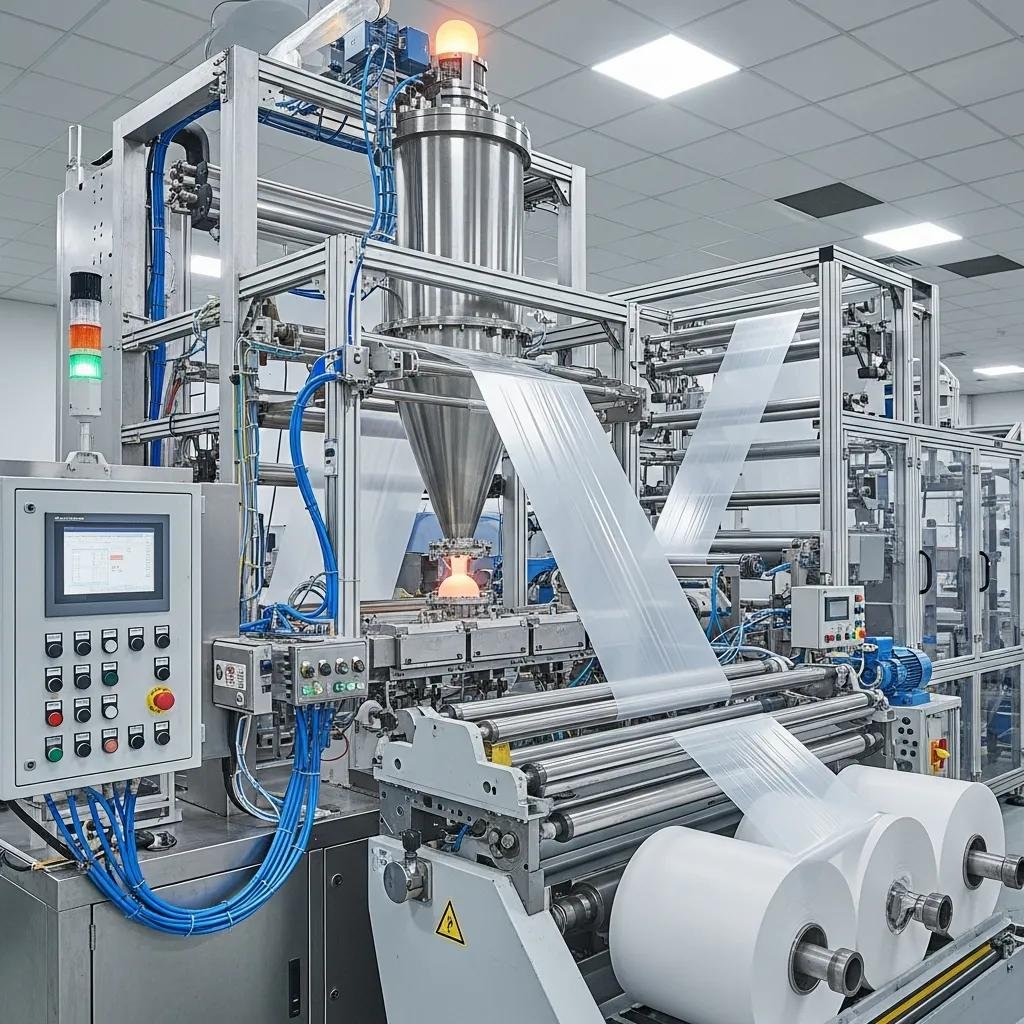
Achieving optimal film dimensions is crucial in the plastic film production industry, as it directly impacts product quality and performance. This article delves into the intricacies of controlling blown film thickness and width, providing insights into the mechanisms and methods that ensure uniformity and precision. Readers will learn about the importance of various parameters, including die gap adjustments, extrusion rates, and the role of advanced machinery in achieving these goals. Many manufacturers face challenges in maintaining consistent film dimensions, which can lead to increased waste and production costs. By mastering the techniques outlined in this guide, producers can enhance their operational efficiency and product quality. The following sections will explore methods for controlling film thickness, key strategies for width control, essential process parameters, the benefits of automatic gauge control, and features to consider when selecting blown film machines.
Controlling film thickness uniformity in blown film extrusion is essential for producing high-quality plastic films. This process involves several critical factors, including die gap adjustments, extrusion rates, and take-up speeds. By understanding and manipulating these variables, manufacturers can achieve consistent film thickness, which is vital for product performance and customer satisfaction.
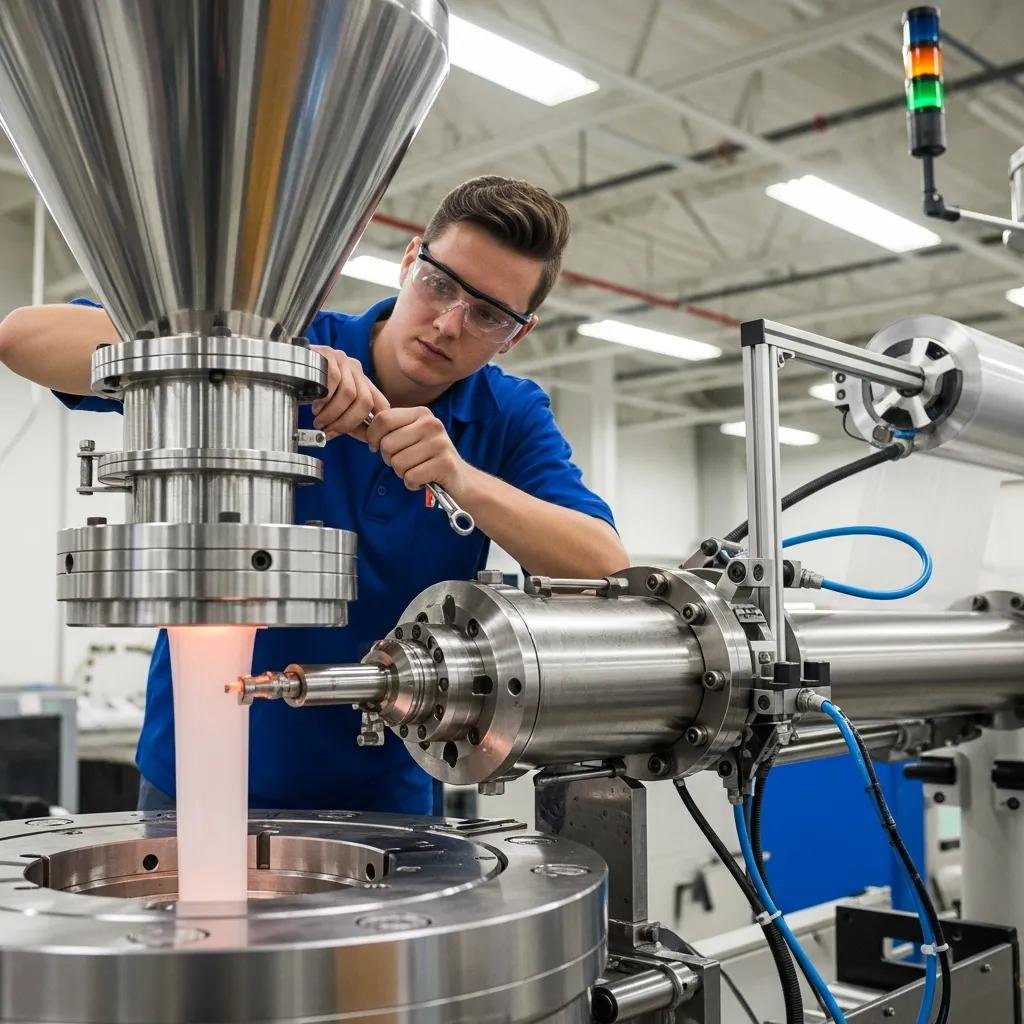
Die gap adjustment is a fundamental aspect of blown film extrusion that directly influences film thickness. The die gap refers to the space between the die lips through which the molten polymer is extruded. A precise die gap ensures uniform flow and thickness across the film. Adjusting the die gap can help compensate for variations in material properties and processing conditions. For instance, a narrower die gap can lead to increased pressure and a thicker film, while a wider gap may produce a thinner film. Manufacturers often employ techniques such as real-time monitoring and automated adjustments to maintain optimal die gap settings, ensuring consistent film quality.
The extrusion rate and take-up speed are critical parameters that significantly impact film gauge consistency. The extrusion rate refers to the volume of polymer being fed into the die per unit time, while the take-up speed is the rate at which the film is pulled away from the die. A balanced relationship between these two factors is essential for maintaining uniform film thickness. If the extrusion rate is too high relative to the take-up speed, it can result in excessive film thickness, leading to defects. Conversely, a low extrusion rate with a high take-up speed may produce a thinner film than desired. Manufacturers must carefully calibrate these parameters to achieve the desired film gauge and ensure product quality.
Precise control of plastic film width is crucial for meeting product specifications and customer requirements. Several methods can be employed to achieve accurate width control, including adjustments to the blow-up ratio, air ring settings, and haul-off system configurations. Understanding these methods allows manufacturers to optimize their production processes and enhance film quality.
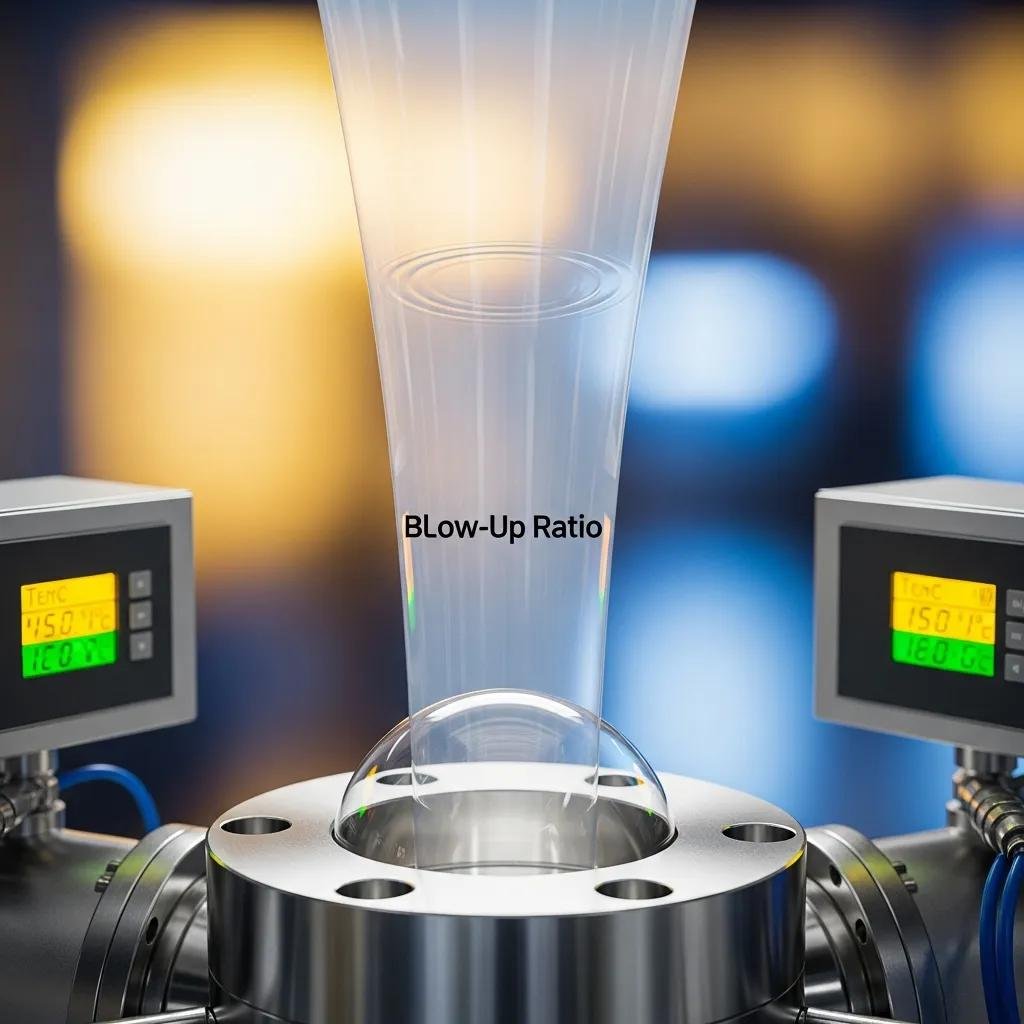
The blow-up ratio is a critical factor in determining film width stability during the extrusion process. It refers to the ratio of the diameter of the bubble to the diameter of the die. A higher blow-up ratio typically results in a wider film, while a lower ratio produces a narrower film. Adjusting the blow-up ratio can help manufacturers achieve the desired film width while maintaining stability. For instance, increasing the blow-up ratio can enhance film strength and reduce the likelihood of defects. However, it is essential to balance the blow-up ratio with other parameters to ensure optimal film quality.
The air ring and haul-off system play significant roles in controlling film width during the extrusion process. The air ring helps cool and stabilize the film as it exits the die, while the haul-off system pulls the film away from the die at a controlled speed. Adjustments to the air ring settings can influence the film’s cooling rate and, consequently, its width. Similarly, the haul-off system’s speed must be calibrated to match the extrusion rate to maintain consistent film width. Manufacturers often utilize advanced control systems to monitor and adjust these parameters in real-time, ensuring precise width control and high-quality film production.
Optimizing film dimension accuracy involves understanding and controlling various process parameters. Key factors include melt temperature, cooling systems, and troubleshooting techniques for common defects. By focusing on these parameters, manufacturers can enhance the quality and consistency of their plastic films.
Melt temperature is a critical parameter that influences the viscosity of the polymer during extrusion. Higher melt temperatures can lead to improved flow characteristics, resulting in better film uniformity. However, excessive temperatures may degrade the polymer, affecting film quality. Cooling systems also play a vital role in maintaining dimensional stability. Rapid cooling helps solidify the film and prevent shrinkage, ensuring that the final product meets dimensional specifications. Manufacturers must carefully balance melt temperature and cooling rates to achieve optimal film stability and quality.
Common film dimension defects, such as uneven thickness or width variations, can significantly impact product quality. Effective troubleshooting techniques include conducting regular equipment maintenance, monitoring process parameters, and implementing real-time quality control measures. For instance, if thickness variations are detected, manufacturers can adjust the die gap or extrusion rate to correct the issue. Additionally, employing statistical process control (SPC) methods can help identify trends and prevent defects before they occur. By proactively addressing these issues, manufacturers can maintain high-quality film production and reduce waste.
Automatic gauge control (AGC) systems are essential for enhancing blown film thickness uniformity. These systems utilize advanced sensors and control algorithms to monitor and adjust film thickness in real-time. By integrating AGC into the production process, manufacturers can achieve greater consistency and reduce material waste.
AGC systems consist of several key components, including thickness sensors, control units, and actuators. The thickness sensors continuously measure the film’s gauge, while the control unit processes this data and sends commands to the actuators to adjust the die gap or other parameters. The primary benefits of AGC systems include improved film quality, reduced material waste, and enhanced production efficiency. By maintaining consistent thickness, manufacturers can meet customer specifications and minimize the risk of defects.
Integrating AGC systems into the blown film extrusion process can significantly reduce material waste and improve overall quality. By continuously monitoring film thickness and making real-time adjustments, AGC systems help prevent over-extrusion and under-extrusion, which are common causes of waste. Additionally, maintaining consistent thickness enhances the film’s performance characteristics, leading to higher customer satisfaction. Manufacturers that implement AGC technology can achieve a more sustainable production process while delivering high-quality products.
When selecting blown film machines, several features should be considered to ensure optimal dimensions and quality. Key factors include multi-layer co-extrusion capabilities, energy efficiency, and after-sales support. Understanding these features can help manufacturers make informed decisions when investing in new equipment.
Multi-layer co-extrusion capabilities allow manufacturers to produce films with varying properties by combining different materials in a single process. This technology enhances film dimension control by enabling the production of films with tailored characteristics, such as improved barrier properties or enhanced strength. By utilizing multi-layer co-extrusion, manufacturers can achieve greater flexibility in their product offerings while maintaining precise control over film dimensions.
After-sales support and maintenance practices are crucial for ensuring consistent film quality over time. Manufacturers should consider equipment suppliers that offer comprehensive support, including training, troubleshooting, and regular maintenance services. Implementing a proactive maintenance schedule can help identify potential issues before they affect production, ensuring that machines operate at peak performance. By prioritizing after-sales support, manufacturers can maintain high-quality film production and extend the lifespan of their equipment.
Plastic Machine Deli
Comprehensive Guide
Plastic Machine Succ
Find Plastic Machine